Da ist mehr.
Viele kennen diesen Moment: Das Leben läuft, der Kalender ist voll, und trotzdem bleibt das Gefühl, dass da noch mehr sein muss.
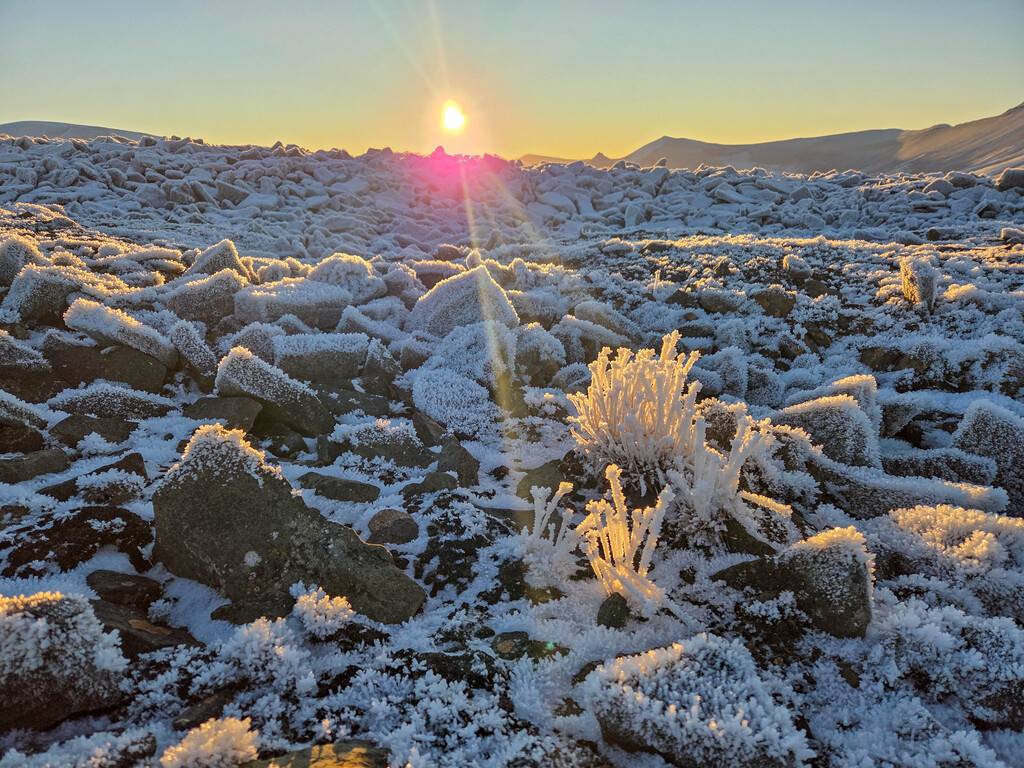
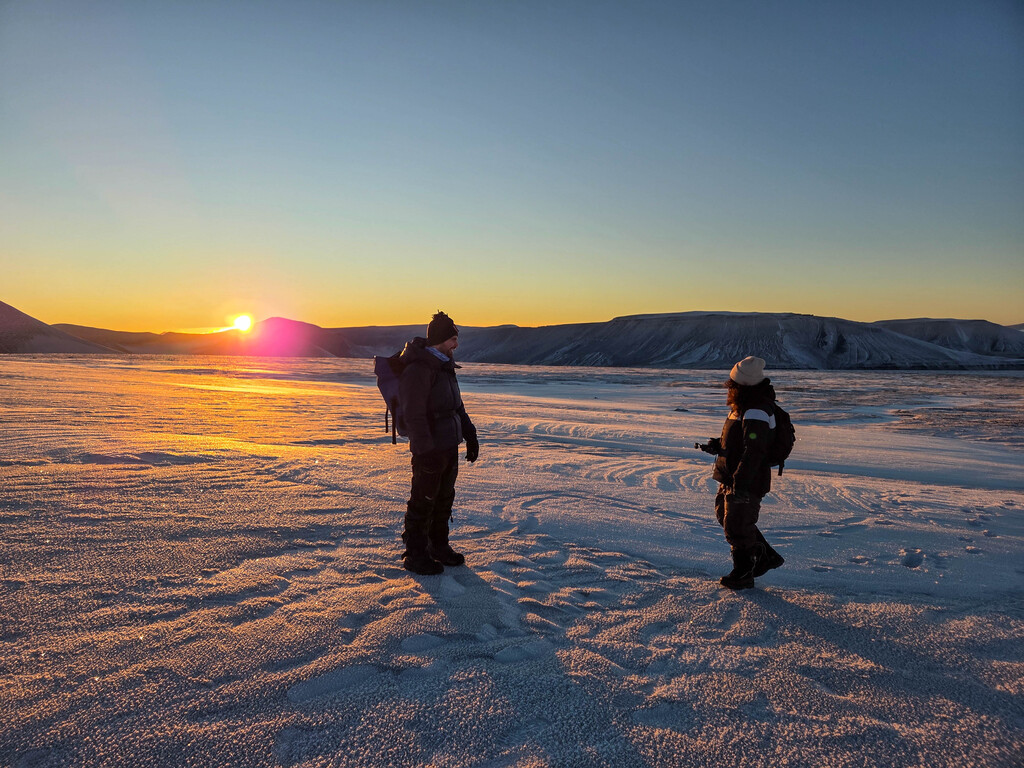
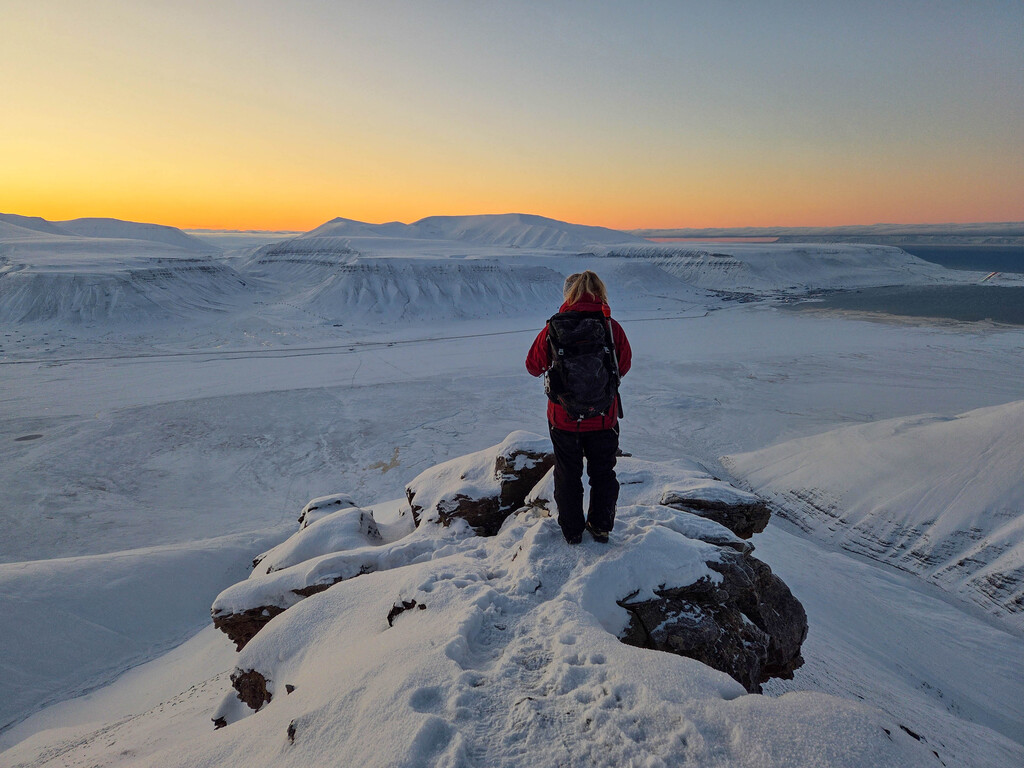
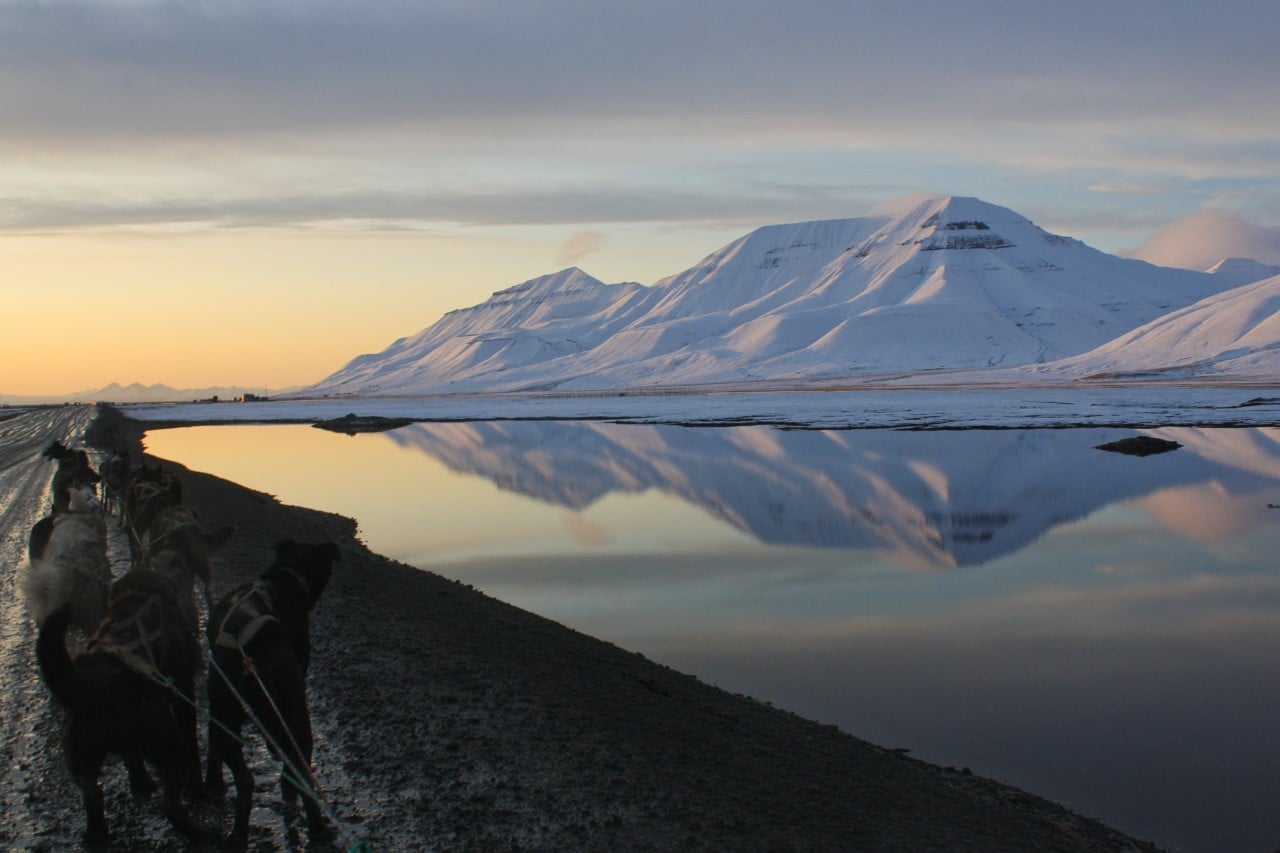
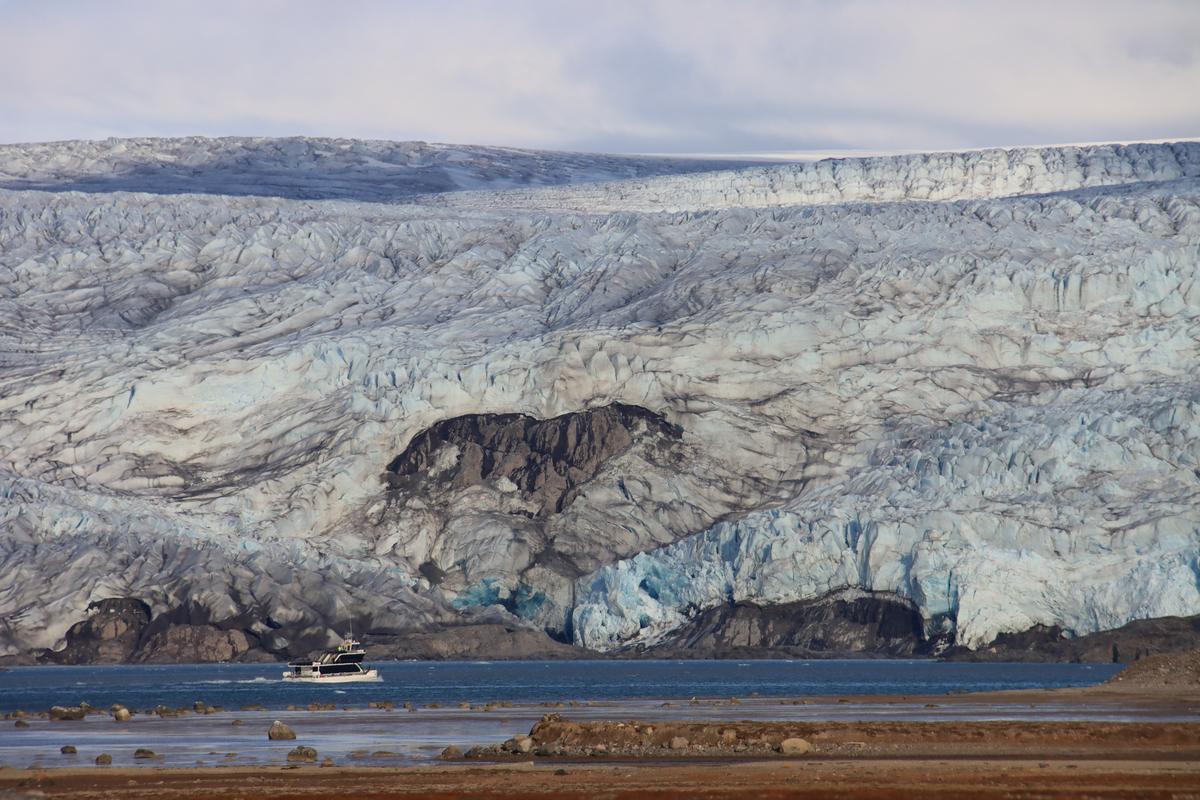
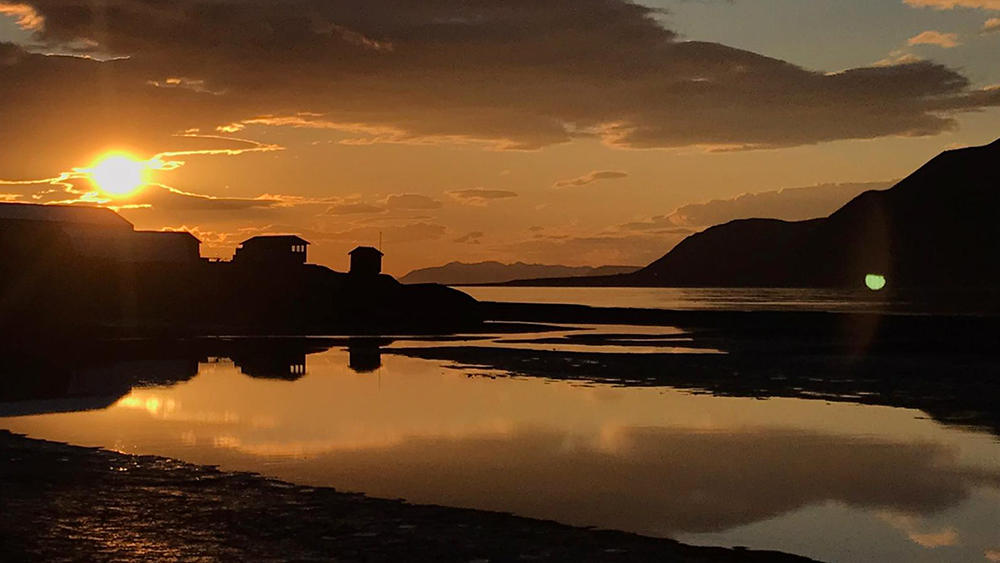
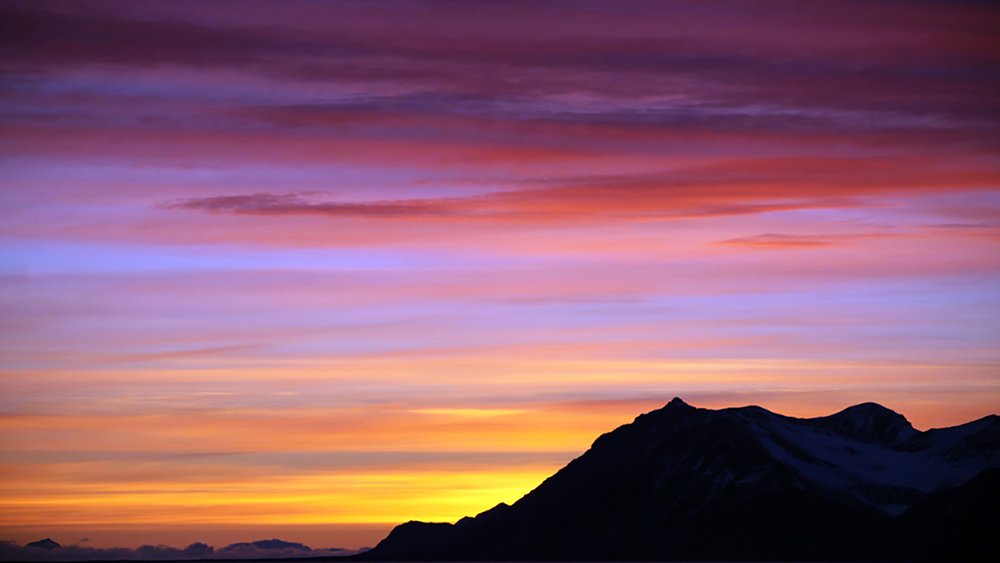
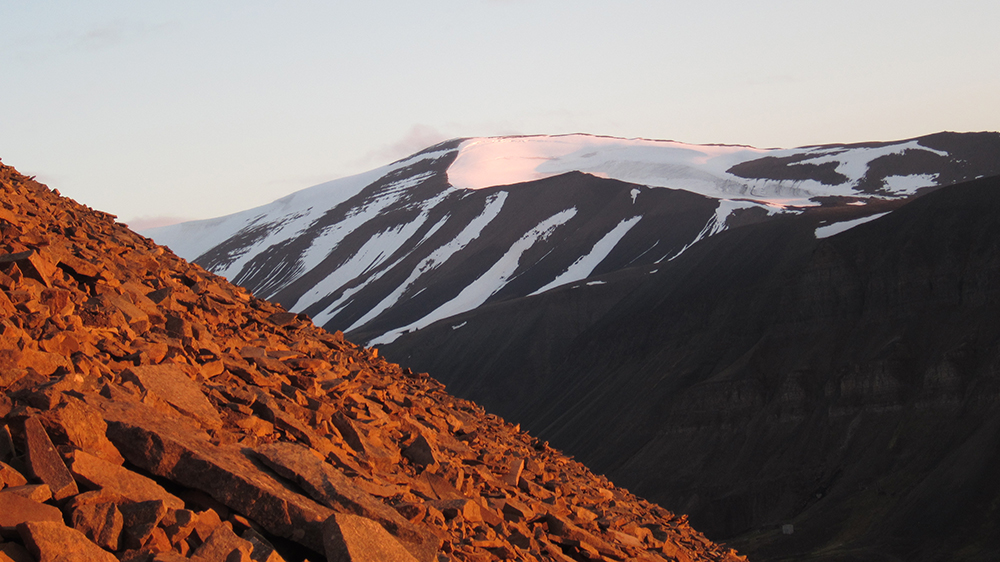
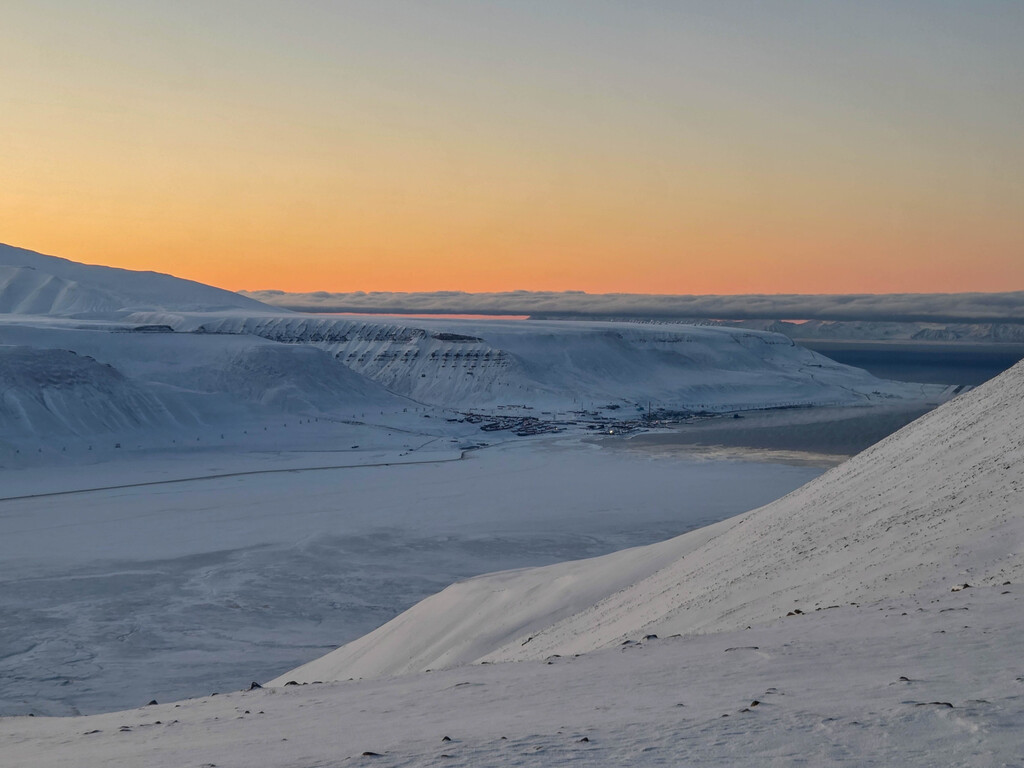
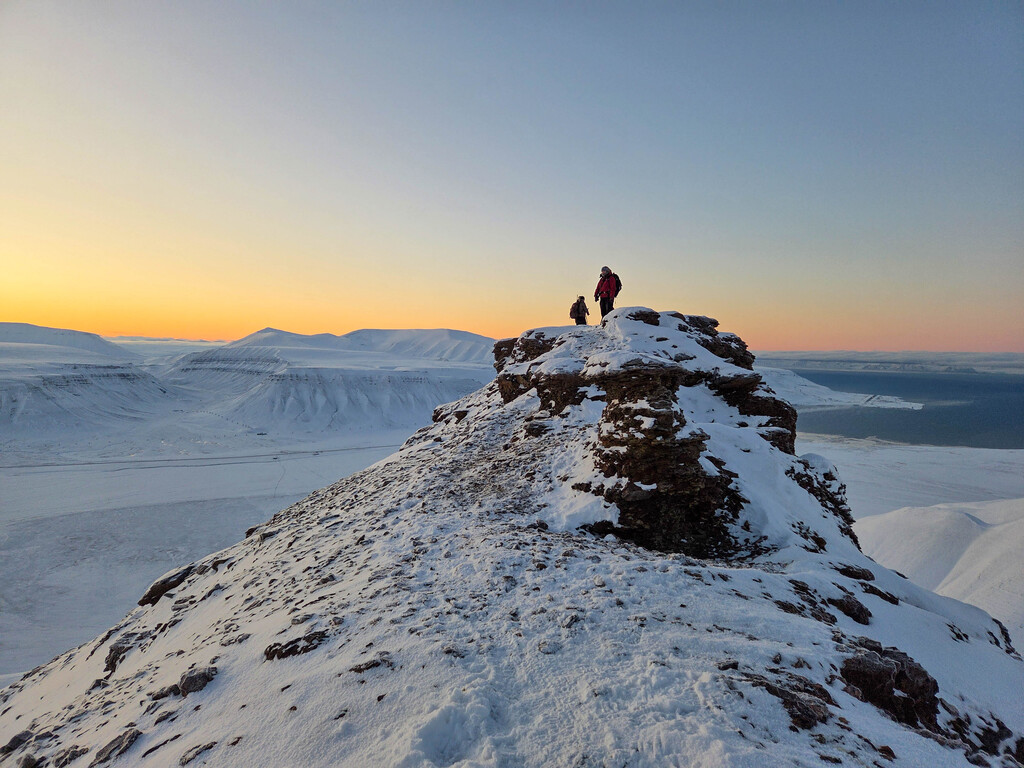
Diese Reise setzt genau dort an. Sie führt an einen Ort ohne Vergleich, ohne Druck und ohne durchgetaktetes Programm. Dafür Weite, so weit das Auge reicht: Berge, die im tiefen Licht in Rosa, Orange und Violett glühen, Fjorde, in denen sich der Himmel spiegelt, der erste Schnee, ein Gipfel über dem Gletscher, Huskies im Adventdalen und die mächtige, blau schimmernde Front des Nordenskiöld-Gletschers. Und Abende in einer kleinen Lodge, in denen Gespräche Zeit haben.
Manche Momente erkennt man erst auf den zweiten Blick. Genau für sie ist hier Zeit.
Warum Spitzbergen im Oktober?
Auf den ersten Blick kalt und karg, auf den zweiten einer der ehrlichsten Orte im hohen Norden. Status zählt hier wenig, und die Landschaft bewertet niemanden.
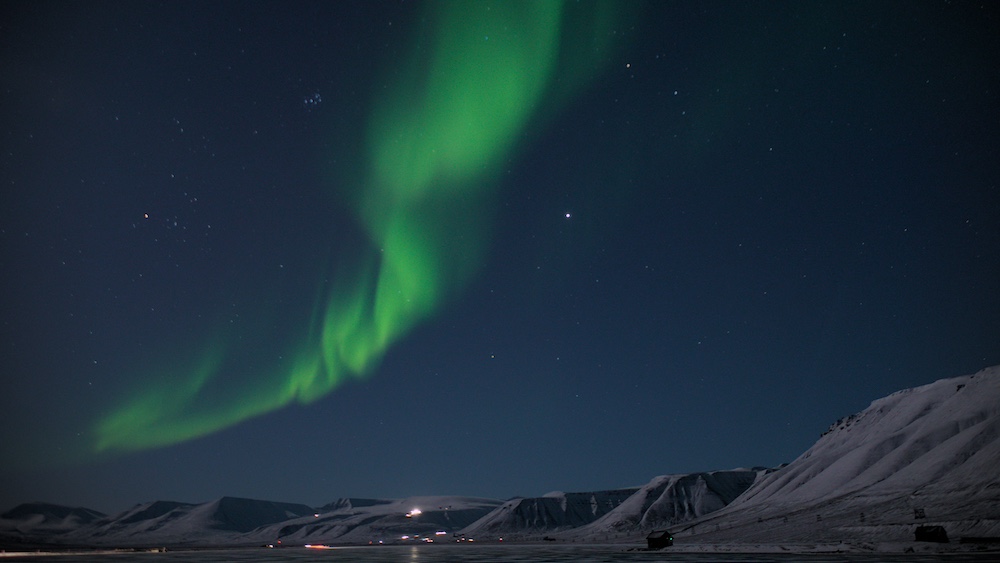
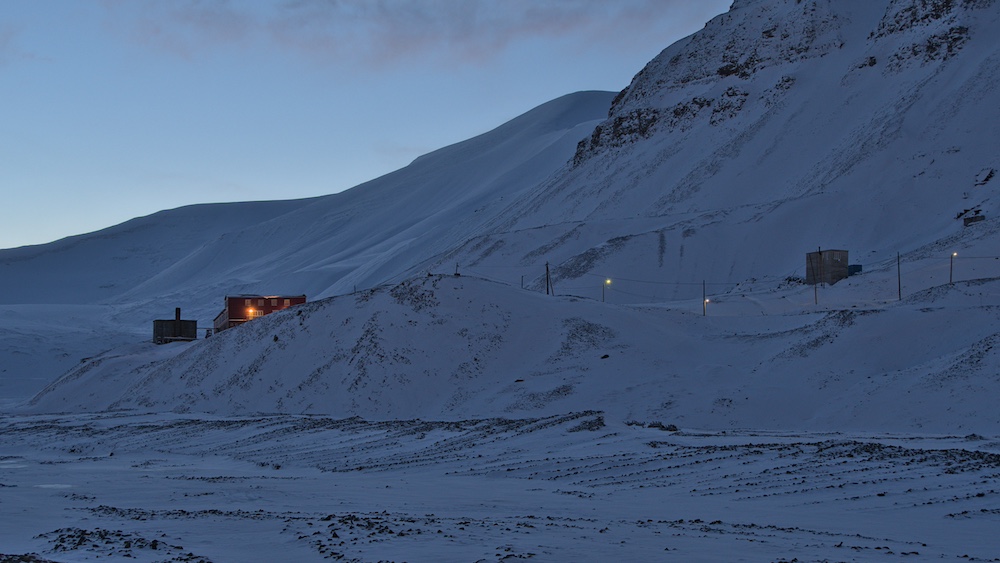
Im Oktober steht die Sonne so tief, dass Sonnenauf- und -untergänge ineinander übergehen. Stundenlang wechselt das Licht von Gold zu Pastell, bis die blaue Stunde alles in kühles Licht taucht. Und mit etwas Glück tanzt das erste grüne Nordlicht über dem Adventdalen.
Eine Jahreszeit dazwischen. Für Menschen, die selbst gerade irgendwo dazwischen stehen.
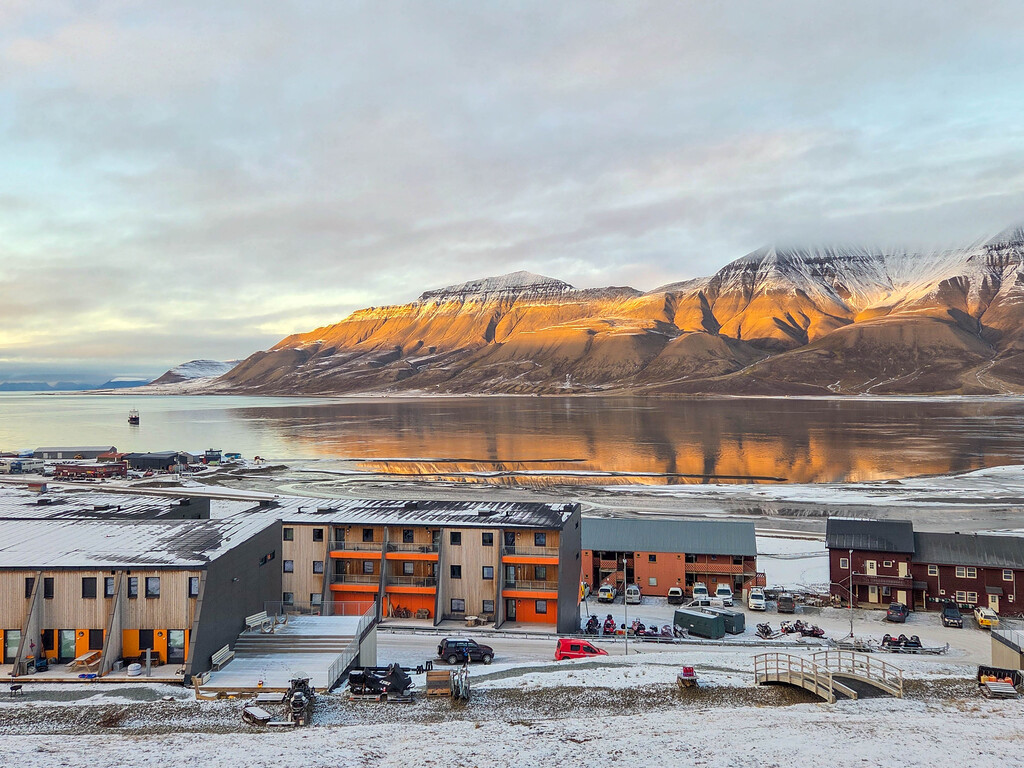
Herzlich Willkommen auf Spitzbergen! Wir holen Euch am Flughafen ab und bringen Euch zu eurer Unterkunft in Longyearbyen. Bei Ankunft vor 15:30 gehen wir noch am selben Nachmittag auf eine Stadtführung in Longyearbyen. Mit dem Minibus fahren wir durch den Ort, halten immer wieder an interessanten Sehenswürdigkeiten, wie zum Beispiel dem Eisbärenschild oder dem globalen Pflanzen-Samenlager, und berichten viel über das Leben in Longyearbyen.
Teil der Tour ist ebenfalls ein Besuch im Svalbard Museum. Dort tauchen wir, auf einer geführten Tour, tiefer in die Geschichte, Natur und Tierwelt Spitzbergens ein und erhalten spannende Einblicke in Polarforschung und Alltag auf Svalbard.
Diese Führung bietet einen kompakten und informativen Überblick über Longyearbyen – ideal, um die Arktis besser kennenzulernen.
Den Ort verstehen, bevor man ihn bewertet.
Am Abend die erste Runde in der Lodge, danach wandern die Handys in die Kiste, für alle, die sich trauen.
 German
 Arrival
 Polar bears
 Polar bear safe zone
 Accommodation - PolarBearLodge
 Clothing
 Terms & Condition
 Credit card only
 Northern lights on Svalbard
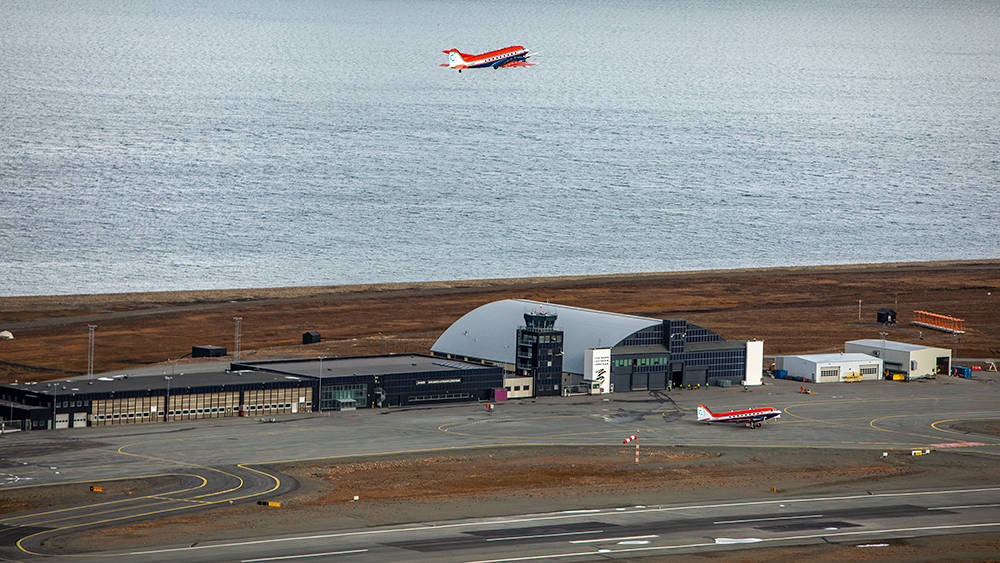
Svalbard can practically only be reached by plane, as apart from cruise ships there are no boat or ferry connections. Daily flights operated by SAS and Norwegian fly via Oslo or Tromsø to Longyearbyen (airport code: LYR). Depending on your departure point, you first need to reach Oslo or Tromsø and change planes there – whereby in Oslo, especially during the low season from October to February, there can be long layovers of up to twelve hours. In some cases, an overnight stay or short visit in Oslo may therefore be worthwhile.
You can book the flights directly with SAS and Norwegian or through the comparison portal of your choice. As a local tour operator, we unfortunately cannot book flights ourselves. Important: book the route as a single through-connection if possible, as connecting flights booked separately will not be reimbursed in the event of delays or weather-related cancellations.
Since Svalbard is not part of the Schengen Area, a valid passport is required even for flights within Europe – an identity card is not sufficient. In addition, your checked luggage may need to be re-checked several times along the way, for example when changing planes in Oslo or on the return journey in Tromsø. Take a close look at your luggage tag or ask again at the baggage drop-off.
After landing, regular airport buses bring you to the town centre, just a few kilometres away.
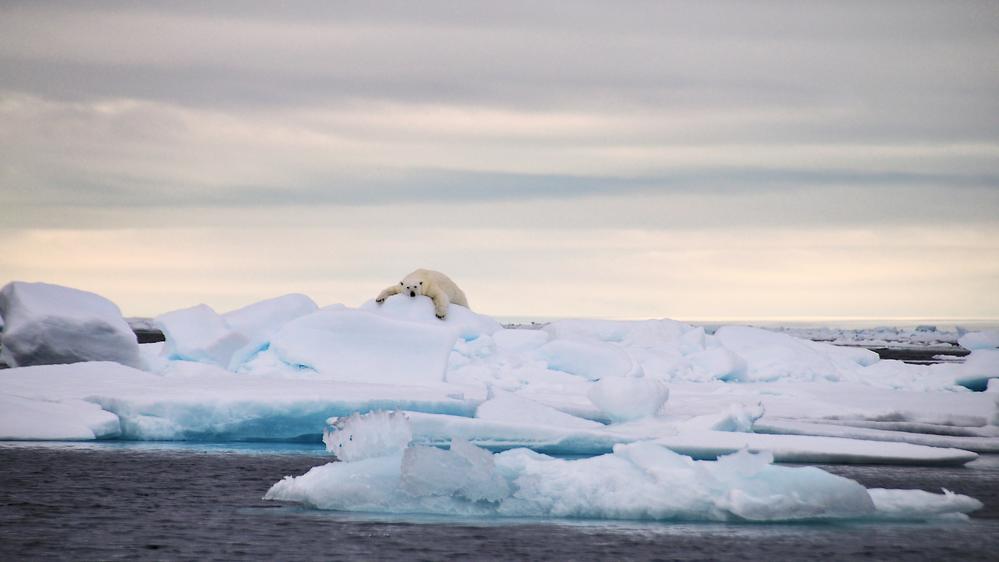
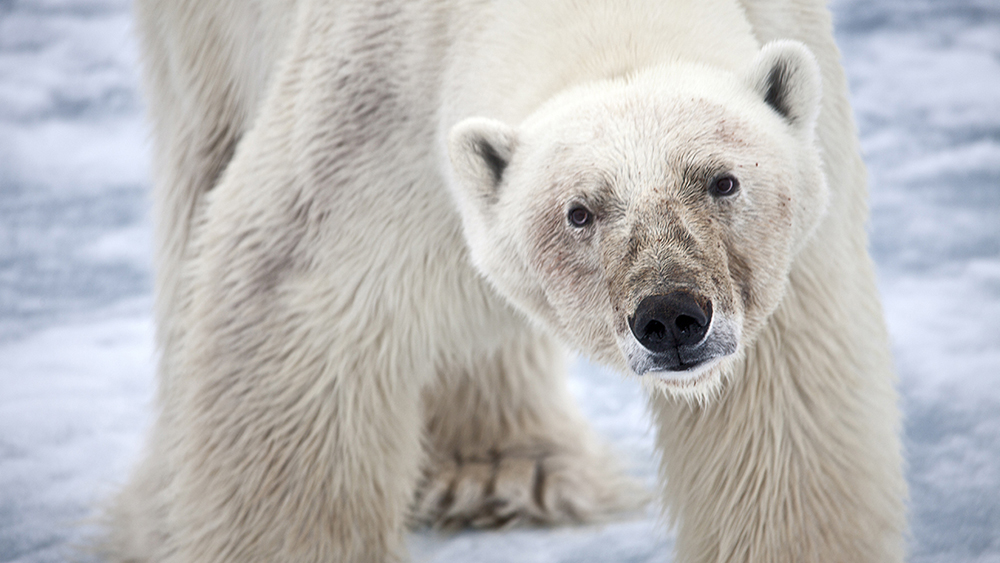
Claude hat geantwortet: Svalbard is known as the realm of the polar bear.Svalbard is known as the realm of the polar bear. At the same time, it's worth keeping your expectations realistic: according to estimates, only around 200 polar bears live on the archipelago – spread across an area roughly one and a half times the size of Switzerland. An encounter with the king of the Arctic is, for many, one of the most memorable moments imaginable. Nevertheless, we want to be open from the very start: a tour should never be booked solely in the hope of seeing a polar bear.
Polar bears are strictly protected on Svalbard. It is prohibited by law to deliberately seek them out, to disturb them or to lure them. Encounters therefore only ever take place from a safe distance – for the protection of the animals as well as for our own safety. The law prescribes a minimum distance that varies depending on the season: until the end of June, a distance of at least 500 metres applies, and after that at least 300 metres. Should we encounter a polar bear, we observe it calmly and respectfully from afar and withdraw as soon as necessary.
Important to know: polar bears are wild animals that roam freely across vast territories. There is no guarantee of seeing one – a sighting is always a matter of luck. As a general rule: the more time you spend on Svalbard and the further you travel into the wilderness, the greater the chance of an encounter. Nothing, however, can be promised.
But that is exactly what makes a genuine encounter in the wild so special and unforgettable. Here we are guests in the habitat of these magnificent animals – and we approach them with the respect and caution they deserve.
On Svalbard, one principle always applies: outside the settlements, you must reckon with polar bears at any time. Longyearbyen itself is considered a "safe area", where you can move around freely without protection. But this area is small – and its boundaries are sometimes, unfortunately, not so easy to recognise. As a rule of thumb, when on your own you should never venture further than the last house.
Along the main routes leading out of town stand the polar bear signs with the black bear, sometimes bearing the words "Gjelder hele Svalbard" – "Applies to all of Svalbard". They mark the boundary of the safe town centre and serve as a reminder: from here on, you are entering the realm of the polar bear.
Anyone leaving this zone – whether on foot, on a tour or on an excursion into the surrounding area – is legally required to carry suitable protection. In practice, this means you may only leave the settlement in the company of an armed guide or with appropriate equipment and experience of your own. On our tours, experienced, armed guides always provide the necessary safety, so that you can enjoy the Arctic wilderness with peace of mind.
Within Longyearbyen itself, you can move around freely and without accompaniment. Nevertheless, polar bears are wild animals and do not respect boundaries. In rare cases, a bear may stray close to or even into the town, especially in autumn and during the dark season - in such a case it is accepted to seek shelter in the next building or car and to call the police. Attentiveness and respect for nature are therefore appropriate everywhere on Svalbard.
For this tour, you'll be accommodated in our Polar Bear Lodge or a comparable accommodation.
The Polar Bear Lodge is located right in the centre of Longyearbyen, just next to restaurants, bars, shops and the supermarket. Furnished with great attention to detail, it is a small but charming oasis of comfort, where your overnight stay becomes part of a wonderful Svalbard experience.
The lodge offers two spacious double rooms (one of which can be used as a twin) and two single rooms. Each is named after an Arctic explorer – Nordenskiöld, Barents, Starostin or Longyear – and individually designed to reflect Svalbard's spirit of exploration. A cosy living room with comfortable sofas, a large dining table, a small kitchenette with fridge and a reading corner stocked with books on Arctic adventures are shared in common. Two shared bathrooms – one with a shower, the other with a generous bathtub – invite you to relax after an eventful day in the wilderness, and a washing machine and dryer can be used for a small fee.
The lodge offers free Wi-Fi. Pets are not permitted, and smoking is only allowed outside in front of the entrance, where a small seating area with a fire pit can be used on request.
Whether breakfast is included or organised yourself depends on the booked tour – details can be found in the respective tour information. As a rule, we reserve the entire lodge exclusively for our groups, creating a real team atmosphere where outdoor activities flow seamlessly into cosy evenings together. For private tours, short stays or small groups, the lodge may occasionally be shared with other guests.
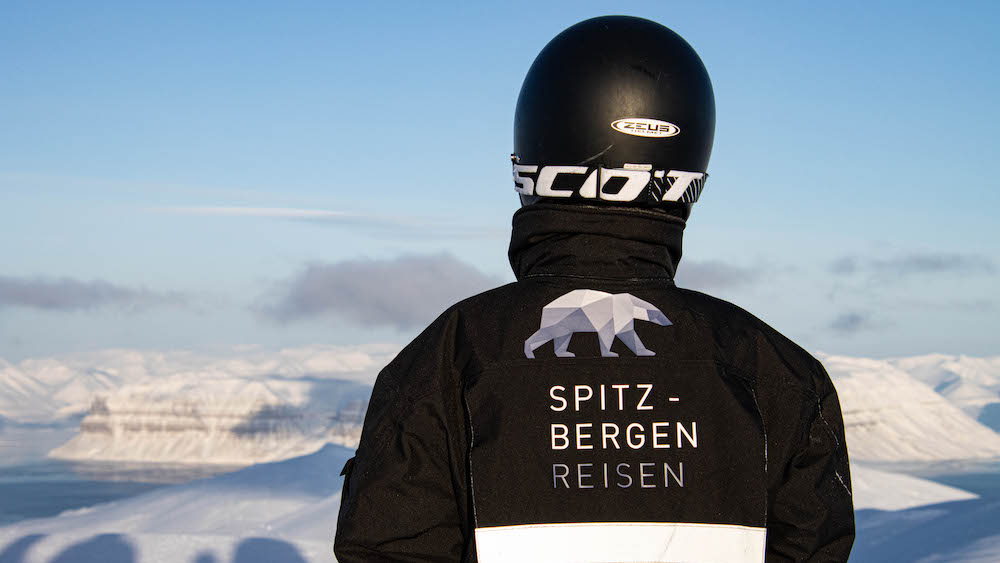
Svalbard lies far north of the Arctic Circle and is cool to cold all year round (averaging around -7 °C), often combined with strong winds and precipitation. When it comes to clothing, two things matter most: the right material and the layering principle.
Instead of a few thick layers, it's better to wear several thin layers on top of one another. This keeps you warmer and can be flexibly adjusted to changing weather. For the inner layers, wool is especially suitable (fleece as an alternative), as it keeps you warm and wicks away moisture. The outermost layer should always be windproof and waterproof. It is particularly important to keep your hands, feet and face warm: several layers of wool socks in waterproof shoes, two pairs of gloves (thin under thick), plus a hat and a tube scarf (buff) or balaclava. Since the sun reflecting off snow and ice can be very dazzling, sunglasses and sunscreen also belong in your luggage.
In winter (approx. +5 to -35 °C), you need warm layers for getting around town and for snow hikes: thermal underwear, thick trousers, a warm jumper, a thick jacket and ski or rain trousers. In summer (approx. -5 to +17 °C), the layering principle applies just as much – as a guide, think of what you would wear at home for outdoor activities in autumn.
We provide special equipment for tours free of charge: for snowmobile and dog-sledding tours, an ultra-warm thermal suit with boots, gloves, a balaclava, a helmet and ski goggles; for snow hikes, snowshoes or spikes; for ship expeditions, rubber boots.
And should something still be missing: in Longyearbyen there are well-stocked outdoor shops where, thanks to tax-free prices, you can stock up affordably.
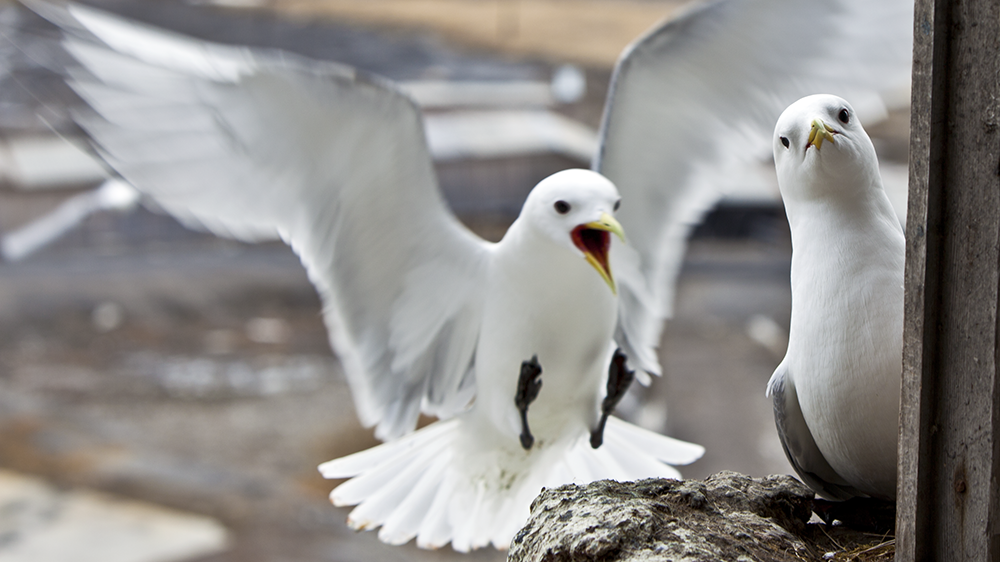
Before you book your tour, we want you to know exactly what you can rely on. In our Terms and Conditions, you will find all the important information regarding booking, payment, cancellation, as well as your rights and obligations as a guest. This way, we ensure clear and transparent conditions right from the start.
We recommend reading through the T&Cs at your leisure before booking. Here you can find them at a glance:
In Longyearbyen you can get by almost entirely without cash, only tips are appreciated in cash. Norway is one of the most cashless countries in the world, and the same applies this far north: with a credit or debit card you can pay everywhere – in restaurants and bars, in shops and supermarkets, at the hotel and on most activities. Common cards such as Visa and Mastercard are accepted without any problem, and contactless payment as well as mobile payment methods like Apple Pay or Google Pay also work reliably.
Cash, on the other hand, is accepted in hardly any shop. We therefore strongly recommend bringing a working credit card with you – ideally a second card as a backup as well, in case something doesn't work with the first one. The local currency is the Norwegian krone (NOK); euros are not accepted.
Please also note: there is neither a cash machine nor a bank in Longyearbyen. Cash can therefore at most be used for tips – for everything else, you will need your card.
Further south, around Tromsø, they are often stronger – but the long polar darkness here makes it possible to see auroras even during the daytime.
Three factors have to come together: darkness, a clear sky, and auroral activity. It only gets dark enough between October and February; in December and January it is dark around the clock during the polar night. For weather and activity forecasts, the Norwegian service YR and the data and live camera of the Kjell Henriksen Observatory are recommended.
The best viewing is from the dark edge of Longyearbyen – for example near Nybyen, at the polar bear sign, or on the beach – without leaving the polar bear safe zone. Booking a tour is neither necessary nor a guarantee; beautiful auroras can often be seen simply from the edge of town.


Contact
+47 952 000 55
info@spitzbergen-reisen.no